
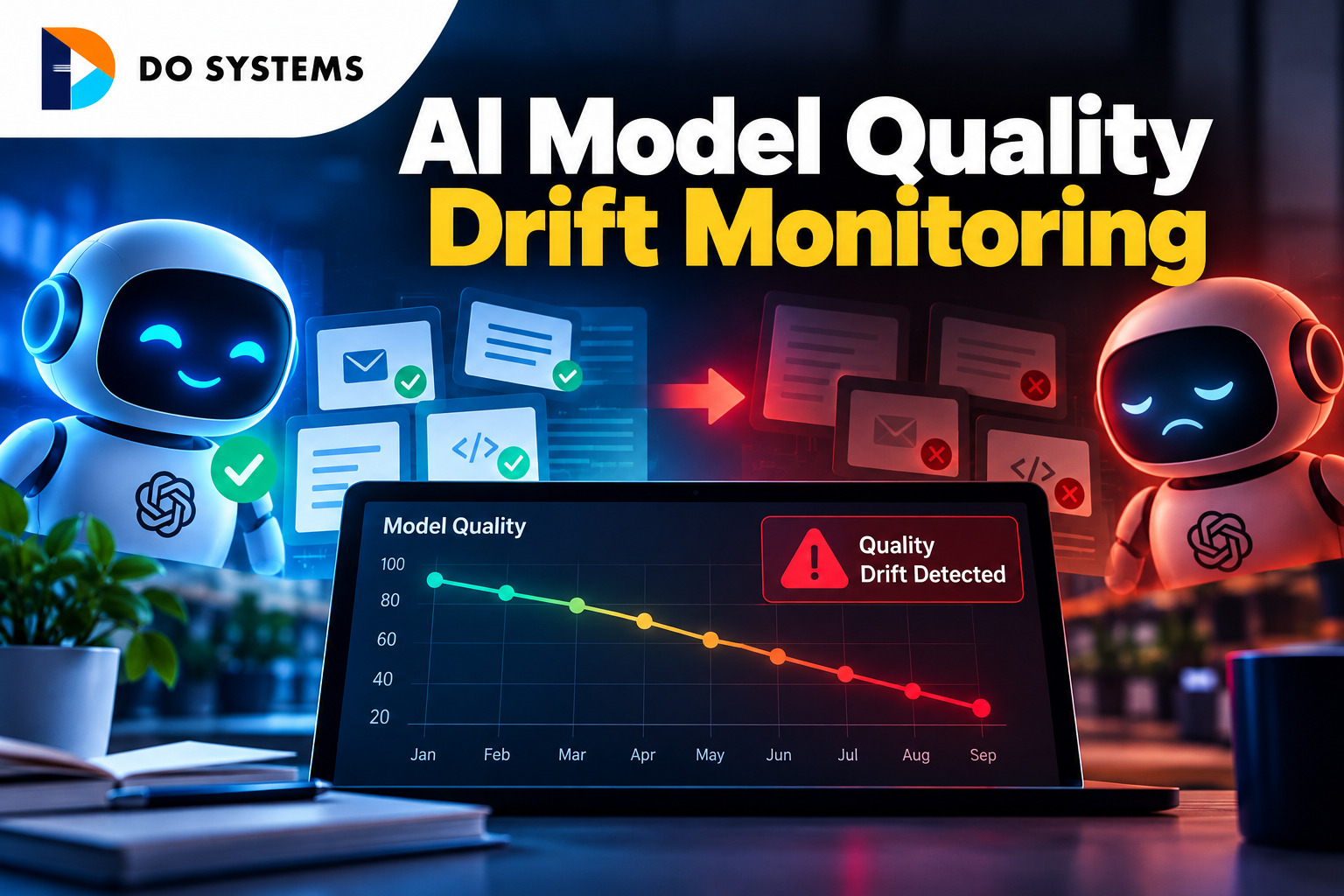
On September 29, 2026, a developer going by “ninjahawk” published an open-source project called LiveNeRF on GitHub. Within 48 hours it had 698 points on Hacker News — a strong signal, by that platform’s standards, that it touched a nerve. The project has one job: figure out, with statistics instead of anecdotes, whether Anthropic’s Claude Opus 5.5 model quietly gets worse after its public launch.
It’s worth being precise about what LiveNeRF actually shows so far, because the honest answer is: not much yet. The project runs roughly 120 frozen test items across four task types — exact computation, token-fidelity transforms, instruction-following, and code with hidden tests — and compares performance against a launch-week baseline using paired-difference statistics, the same basic approach used in clinical and behavioral research. As of this writing, its own results table is explicit that “nothing in the Results table is real data yet” — the project is still in its baseline-collection phase. No degradation has been confirmed. That’s a feature of the design, not a flaw in the story: a careful, pre-registered statistical test that hasn’t found anything yet is more trustworthy than a viral claim that jumps straight to a verdict.
Why 698 Hacker News Points Is the Real Story
The interesting fact isn’t whether Opus 5.5 has degraded. It’s that a single independent developer felt the need to build a dedicated, statistically rigorous benchmark — complete with pre-registered significance thresholds and clustered standard errors — because no comparable, continuous, public quality-regression signal exists from the vendor itself. Nearly 700 people on a technical forum thought that gap was worth paying attention to.
That gap doesn’t close once you leave the world of chatbots and start talking about production business workflows. If anything, it widens. A consumer chatbot user who notices a model “feels off” can just complain on a forum. A company running its contract review, customer support drafting, or executive email triage on top of a vendor-hosted foundation model has no equivalent signal at all — unless it built one.
The Blind Spot in a Typical AI Vendor Relationship
Here’s the pattern we see across mid-size companies adopting AI-powered workflows: there’s a validation period during onboarding — often thorough, often genuinely rigorous — where the team checks that the AI output meets their bar. Then the system goes live, and nobody looks again unless something breaks loudly enough to generate a complaint.
Meanwhile, the vendor side of that relationship is under constant pressure to manage inference cost. Model providers routinely adjust what’s actually running behind a given API endpoint or model name — different quantization, different routing between model variants, different serving infrastructure optimized for cost rather than peak quality. None of this is necessarily malicious, and much of it is invisible even to careful customers, because API version numbers don’t always change when the underlying serving behavior does. The result is a quality curve that can drift downward gradually enough that no single week looks alarming, while the cumulative effect over a quarter is real.
If a company’s only quality signal is “did anyone complain,” that signal arrives late — after a client noticed a worse draft, after a customer had a worse support interaction, after the cost of the drift has already been paid in reputation or rework.
A Framework: Build Your Own Model-Drift Gauge
You don’t need Anthropic’s cooperation, and you don’t need academic-grade statistics, to close most of this gap. The core idea from LiveNeRF’s methodology translates directly to a business setting:
First, freeze a small panel of real work samples — actual emails, actual contract clauses, actual support tickets — that represent what your AI system handles day to day. Ten to twenty good examples, chosen to be representative rather than exhaustive, is enough to start.
Second, score your current AI output against those samples at the moment you go live, and treat that as your baseline. This doesn’t require a PhD-level rubric — a simple pass/fail or 1-5 quality score, scored consistently by the same person or a fixed set of criteria, is enough to detect meaningful change over time.
Third, rerun the same panel against the same samples on a fixed schedule — monthly is a reasonable starting cadence for most mid-size deployments — and compare the new scores to the baseline, not to last month’s scores. Comparing only to the immediately prior check lets slow drift hide in a series of small, individually-unremarkable changes.
Fourth, set a simple trigger: if the score drops by a meaningful, pre-agreed margin from baseline, that’s the point where a human reviews what changed — on the vendor’s side, on your own configuration side, or in how the task itself has evolved.
This is the same discipline behind our Executive Email Assistant’s tagging-accuracy checks — we don’t just ship it and hope.
What to Do This Quarter
If your company has any AI-powered workflow that’s been running for more than about three months without a fresh quality check against its original baseline, that’s the first place to look — not because something is necessarily wrong, but because right now you have no way of knowing either way. The LiveNeRF project is a useful reminder that “trust the vendor” and “verify the output” are not the same thing, and only one of them is actually in your control.
We help clients build exactly this kind of lightweight, ongoing model-quality monitoring into their AI integrations from day one, so a vendor-side change shows up as a data point on a dashboard instead of a surprise in a client meeting. If you want a second set of eyes on whatever AI workflow your team is currently running unmonitored, we’re glad to talk — no hard sell, just a conversation about what “still working as well as it did on day one” would actually look like for your specific setup.
Comments are closed