
There’s a conversation I have with almost every new client that goes roughly the same way.
I ask them to walk me through a typical week. What their team spends time on. What the repetitive, high-volume tasks are. What the processes are that someone has to touch manually, every single time, without fail.
And at some point in that conversation, usually within twenty minutes, I’ll identify three or four things that AI could handle. Not in theory – specifically, with tools and approaches we’ve already built and deployed for other businesses.
The reaction is always the same. “I didn’t know you could do that.”
Most business owners understand that AI is changing things. Very few have a clear picture of what it actually looks like inside their specific operation. So that’s what I want to share here – not a theoretical overview of AI capability, but concrete examples of the work AI is replacing in real businesses right now.
Document Processing and Review
If your team handles contracts, invoices, applications, reports, or any kind of structured document in volume, this is almost certainly your highest-ROI AI opportunity.
Natural language processing – the branch of AI that deals with understanding and extracting meaning from text – has reached a point where it can read, interpret, and process documents with a level of accuracy that matches or exceeds manual review, at a fraction of the time and cost.
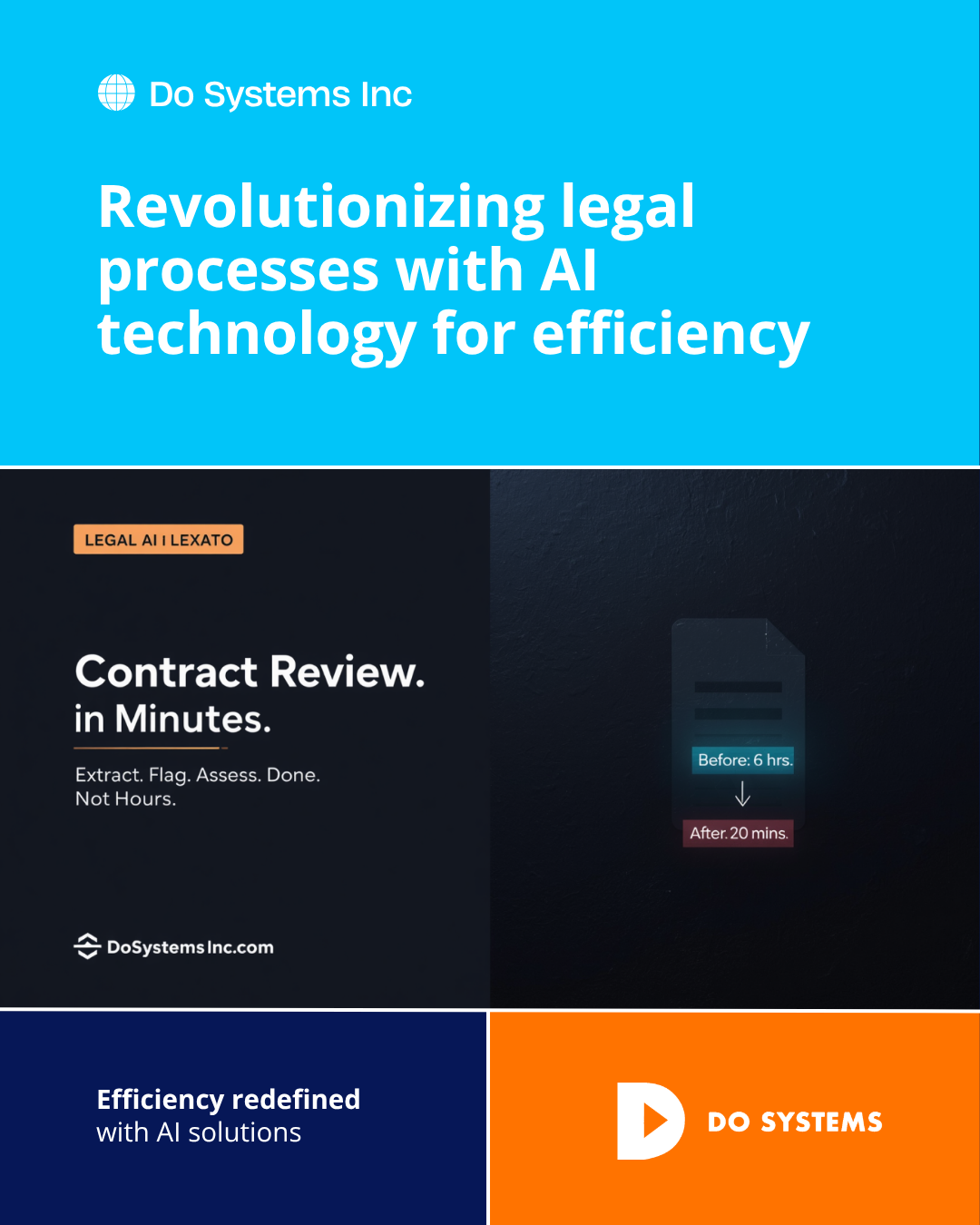
We built a document processing system for a legal services client that was spending significant associate time on contract review – extracting key clauses, flagging non-standard terms, summarising obligations. The AI system now handles first-pass review on every contract, producing a structured summary and risk flag report in seconds. Associates review the output rather than reading from scratch.
The time saving was around 70% per document. Across the volume of contracts they process monthly, that translated to the equivalent of two full-time roles redirected to higher-value work.
The same approach applies to invoice processing, insurance claims, loan applications, compliance documents – any domain where humans are currently reading documents and extracting structured information from them.
Customer and Internal Query Handling
The second category is query handling – the constant stream of questions that come into a business through email, chat, phone, or internal systems.
Most businesses deal with this the same way: staff read the query, work out what’s being asked, find the answer, and respond. It’s time-consuming, it doesn’t scale, and a significant proportion of queries are variations of questions that have been answered hundreds of times before.
AI agents – specifically ones built on top of your actual business data and processes, not generic chatbot templates – can handle a large proportion of this volume without human involvement. Not by giving generic responses, but by actually understanding what’s being asked and retrieving the specific, accurate answer from your knowledge base, systems, or documentation.
We’ve built these for businesses across legal, logistics, real estate, and finance. The deployments that work best are the ones where we’ve trained the AI on the client’s actual data – their policies, their product details, their process documentation – rather than relying on off-the-shelf knowledge.
The difference between a well-built custom AI agent and a generic chatbot is the difference between something that genuinely reduces workload and something that frustrates customers and gets abandoned within a month.
Predictive Analytics and Forecasting
The third category is less about replacing manual work and more about giving decision-makers information they currently don’t have.
Machine learning models can be trained on your historical business data to forecast outcomes – demand, churn, equipment failure, project timelines, revenue – with a level of accuracy that static spreadsheet models can’t match. Not because they’re magic, but because they can identify patterns across hundreds of variables simultaneously that no human analyst would have the bandwidth to consider.
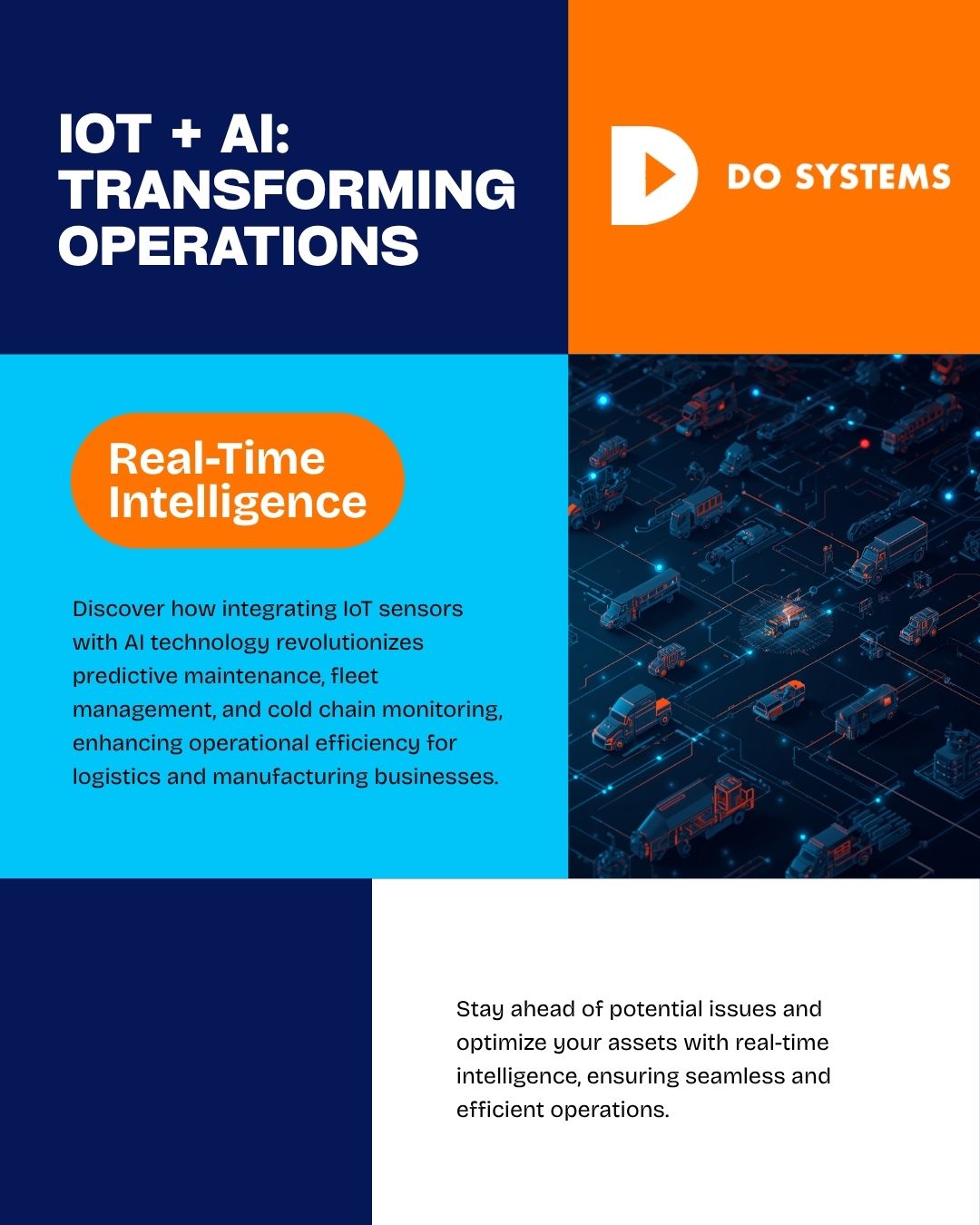
A logistics client of ours was losing significant revenue to fleet downtime – vehicles failing in the field, outside the standard maintenance schedule. We built a predictive maintenance model trained on their vehicle sensor data and maintenance history. It now flags individual vehicles as high-risk for failure two to three weeks before issues manifest, allowing maintenance to be scheduled proactively.
Unplanned downtime incidents dropped by over 60% in the first twelve months.
The pattern is consistent: there’s almost always historical data sitting in a business that contains signals about future outcomes. The question is whether you have the tools to read those signals.
What to Do With This
If any of the above resonates – document processing, query handling, predictive analytics – the first step isn’t a major project. It’s a conversation about where the friction is in your operation and whether there’s an AI solution that addresses it specifically.
At Do Systems, we offer a free initial AI strategy consultation. We’ll walk through your workflows, identify the highest-impact opportunities, and give you a realistic picture of what a proof-of-concept would look like – timeline, cost, and expected outcome.
Most of our proof-of-concepts run four to eight weeks. Most clients see a positive ROI case before the end of the first engagement. The work your team is doing manually – some of it needs to stay that way. But more of it than you probably realise doesn’t.
Comments are closed