It was a Wednesday afternoon when our monitoring platform flagged something on a client’s primary file server. Not a critical alert. Not even a warning, exactly. Just a shift in the AI’s confidence score for that server’s health — from 94% to 81% over a 6-hour window.
To a human glancing at a dashboard, nothing would have looked wrong. CPU was normal. Memory was fine. Disk space was adequate. Network throughput was typical. Every traditional metric was green.
But the AI had been watching something else. The pattern of read/write operations. The frequency of error correction events. The microscopic variations in response time that individually meant nothing — but collectively, in context, told a specific story.
We contacted the client, explained what we were seeing, and recommended a server health check and backup verification as a precaution. Seventy-two hours later, the drive array failed. Because we’d already verified their backup, staged a replacement, and scheduled a maintenance window, the actual downtime was four hours on a Saturday morning. Without the AI flag? They’d have been looking at multiple days of unplanned outage, potential data loss, and a recovery bill that would have run into tens of thousands of dollars.
What the AI Actually Detected
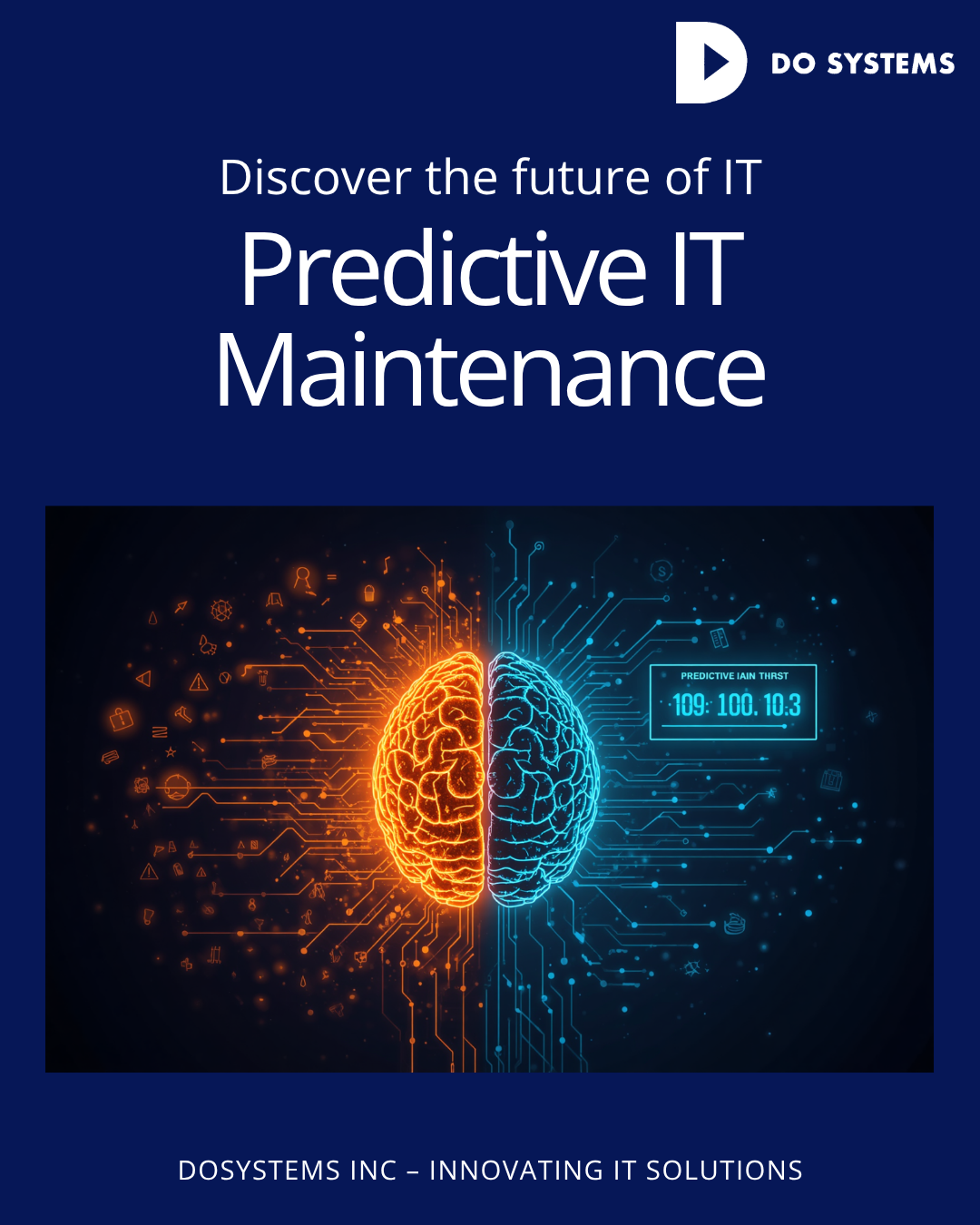
I think it’s worth going into some detail here, because the technical story is genuinely interesting — and it illustrates why AI monitoring is fundamentally different from what came before it.
The server’s drive array had been developing what’s called bit rot — gradual, silent data degradation caused by cosmic rays, electromagnetic interference, and the natural physics of magnetic storage. Individual bits were flipping. The drive’s error correction system was catching and fixing them, which is exactly what it’s supposed to do.
The problem is that error correction events leave a trace. They show up in the drive’s SMART data — a health monitoring system built into modern storage hardware. Individually, any single error correction event is meaningless. But the frequency of those events, tracked over time and compared against baseline patterns for that specific drive model and age, tells you something.
The AI had established a baseline for that drive over months of observation. It knew what normal looked like — including the normal rate of error correction events for a drive of that age and usage profile. When the rate started climbing, it noticed. And it correlated that signal with the subtle changes in read/write timing that were also starting to appear. The server wasn’t sending distress signals that a human would have noticed. It was whispering. And the AI was listening.
Why This Matters More Than It Might Seem
The obvious benefit is avoiding unplanned downtime. That’s significant — we’ve already established in previous posts what downtime actually costs a small business in lost productivity, missed revenue, and damaged client relationships. But there’s a subtler benefit that I think is actually more important for growing businesses: predictability.
The server wasn’t sending distress signals that a human would have noticed. It was whispering — and the AI was listening.
When your IT infrastructure is managed reactively, you can’t plan around it. You don’t know when the next outage is coming. You can’t budget for it accurately. You can’t reassure your clients with any confidence. Every major IT failure is a surprise — and surprises at the infrastructure level are almost always expensive.
When AI is watching your environment continuously and flagging degradation trends early, you get something that’s surprisingly rare in the world of small business IT: advance notice. You can schedule maintenance windows. You can order replacement hardware before you need it urgently. You can manage the situation on your terms rather than in crisis mode. Over the past 18 months, DoSystems clients running our AI-monitored managed services have seen a 68% reduction in unplanned downtime incidents compared to their previous 18 months. That’s not because we got lucky. It’s because we started catching problems before they became incidents.
The Human Side of AI Monitoring
I want to be clear about something, because it matters: the AI doesn’t run your IT. It informs the people who do.
When our platform flagged that server, the next step wasn’t automated remediation. It was a human engineer reviewing the data, assessing the risk, making a judgement call about urgency, and having a conversation with the client. The AI gave us a head start and pointed us in the right direction. The expertise and the relationship were still ours to bring.
This is the model that actually works. Not AI replacing IT professionals — that’s not realistic and it’s not desirable. But AI dramatically extending the reach of what a skilled IT team can monitor, and dramatically improving the quality of the information they act on. The engineers on our team now have visibility into signals that would have been invisible five years ago. They’re better at their jobs because the AI makes them better informed. And our clients get the benefit of that in the form of fewer surprises and more control over their infrastructure.
What to Ask Your Current IT Provider
If you’re evaluating your current IT support arrangement, here are a few direct questions worth asking.
What monitoring tools are you using, and are they AI-powered or threshold-based? How far in advance have you been able to predict and prevent infrastructure failures for your clients? Can you show me examples of proactive interventions you’ve made before an incident occurred?
The answers will tell you a lot about whether you’re getting genuine proactive protection — or just a fast response when things go wrong. There’s nothing wrong with fast response. But predictive prevention is better. And in 2026, for businesses that depend on their technology, it should be the standard.
Ready to move from reactive IT to predictive IT? Visit www.dosystemsinc.com
Comments are closed