
Most AI tools in business today work on a prompt-and-response basis. You ask a question, the AI answers. You describe a task, the AI completes it. The interaction is a single exchange.
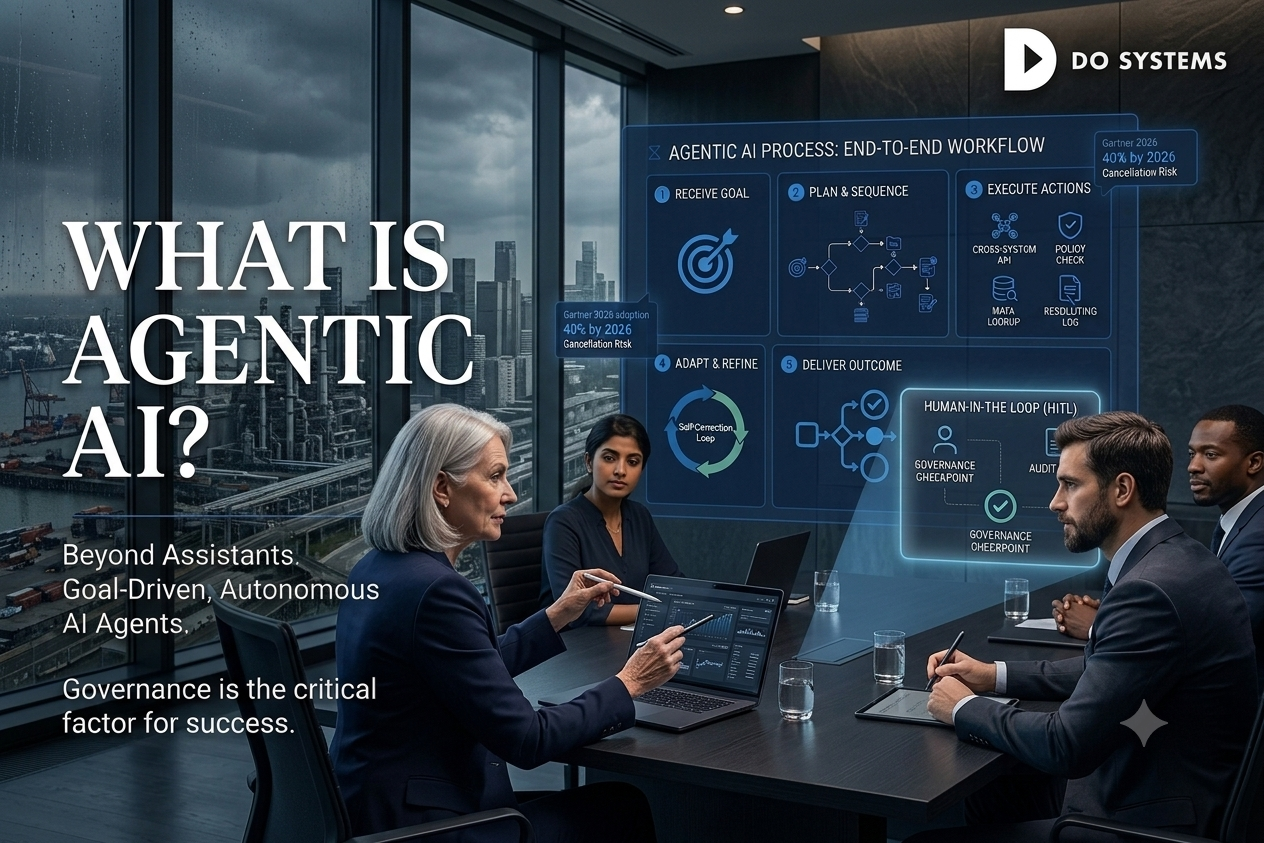
Agentic AI works differently. An AI agent receives a goal – not just a task – and then plans and executes the steps needed to achieve it, using tools, checking its own outputs, and adjusting its approach based on intermediate results. The key distinction is autonomy across multiple steps, not just quality on a single step.
Gartner predicts that 40% of enterprise applications will be integrated with task-specific AI agents by the end of 2026, up from less than 5% at the start of 2025. That is a shift happening at a speed most business leaders have not yet planned for.
This guide explains what agentic AI is in operational terms, where it is already delivering measurable value, what the genuine risks are, and what you need to have in place before you consider deploying it.
How Agentic AI Works in Practice
An AI agent has four capabilities that distinguish it from a standard AI tool: goal decomposition (breaking a complex objective into steps), tool use (accessing external systems – databases, APIs, web search, code execution), memory (retaining context across steps within a session), and reflection (checking its own output and revising its approach when intermediate results are not on track).
A practical example: a standard AI tool can draft an email. An AI agent can receive the goal ‘arrange a meeting with the three suppliers we spoke to last quarter, find a time that works across all calendars, draft the agenda based on our open purchase orders, and send the invitations’ – and execute each step autonomously, checking its own outputs along the way.
The difference is not just speed. It is the ability to handle multi-step, cross-system workflows that currently require human coordination. That is where the business value is concentrated.
McKinsey estimates that 23% of organisations have now scaled at least one agentic AI system into production, while 39% are experimenting. The majority of business leaders are still in the observation phase – which makes right now the right time to understand the technology before deployment decisions are made.
Where Agentic AI Is Delivering Value Today
The use cases delivering consistent, measurable results in current deployments share a profile: they are multi-step, they cross multiple systems, and they currently require human coordination to sequence correctly.
Customer service resolution. AI agents that handle a customer query end-to-end – looking up account history, checking order status, applying policy, drafting a resolution, and logging the outcome – without a human involved at each step. The agent handles the complete workflow, not just the conversational part.
Sales research and preparation. AI agents that research a prospect before a call – pulling company news, checking CRM history, identifying relevant case studies, and preparing a briefing – in the time between the meeting being booked and it taking place. Sales reps arrive better prepared without spending preparation time themselves.
Finance reconciliation. AI agents that match transactions across systems, flag discrepancies for human review, generate draft reconciliation reports, and log their own audit trail. The human role shifts from performing reconciliation to reviewing and approving the agent’s output.
IT incident first response. AI agents that detect an alert, diagnose probable root cause using historical incident data, apply standard remediation steps for known issue types, and escalate with a structured summary when the issue falls outside known patterns.
The Real Risks of Agentic AI
Agentic AI carries risks that standard AI tools do not, because autonomous action across multiple steps amplifies both the value and the consequences of errors.
Gartner’s 2025 survey of IT application leaders found that 74% view AI agents as a new attack vector, and only 13% strongly agreed their organisation had the governance structures needed to manage them effectively. The risk is not theoretical – an agent with access to systems and the ability to take actions creates a new category of security exposure.
The most common risk categories in current agentic deployments are: action scope (agents taking actions beyond the intended boundary), data access (agents accessing data they should not see as part of their task sequence), error propagation (early-step errors compounding through subsequent steps before human review), and unpredictable behaviour under novel conditions (agents encountering situations outside their training that produce confident but incorrect actions).
Gartner projects that more than 40% of agentic AI projects will be cancelled by 2027. The primary causes are escalating costs, unclear business value, inadequate governance, and agents that behave in ways that create risk or violate policy. These are not technology failures – they are deployment and governance failures that are predictable and preventable.
What You Need Before You Deploy AI Agents
Four prerequisites determine whether an agentic AI deployment creates value or creates risk.
- Defined action boundaries. Before deployment, document precisely what actions the agent is permitted to take, what systems it can access, what data it can read and write, and what it must escalate to a human. Action boundaries are not optional guardrails – they are the primary risk control for agentic systems.
- Human-in-the-loop design for high-stakes actions. Not every agent action requires human approval, but actions with significant consequences – sending external communications, processing payments, modifying customer records – should have human confirmation built into the workflow until the agent’s reliability on that action type is established.
- Audit trail by design. Every action the agent takes should be logged with the reasoning behind it. This is essential for debugging, for compliance, and for building the confidence that allows the action boundary to expand over time.
- A narrow first deployment. The organisations that successfully scale agentic AI almost always start with a single, well-defined workflow rather than a broad, multi-system deployment. A narrow first deployment generates the data, the confidence, and the governance learning needed to expand safely.
Frequently Asked Questions
What is the difference between AI agents and AI assistants?
An AI assistant responds to individual prompts – it answers a question, completes a task, generates content. An AI agent pursues a goal across multiple steps, using tools and making decisions along the way. The assistant waits for the next prompt. The agent sequences its own next steps. The distinction matters because agents require different governance, different risk controls, and different deployment thinking than assistants.
Are AI agents ready for SMB deployment?
Select use cases are production-ready for SMBs today – particularly in customer service triage, sales research preparation, and IT helpdesk first response. Broader, multi-system agentic deployments are more complex and carry higher governance requirements. SMBs should start with a single, narrow use case with well-defined action boundaries rather than a broad agentic platform deployment.
How do AI agents connect to business systems?
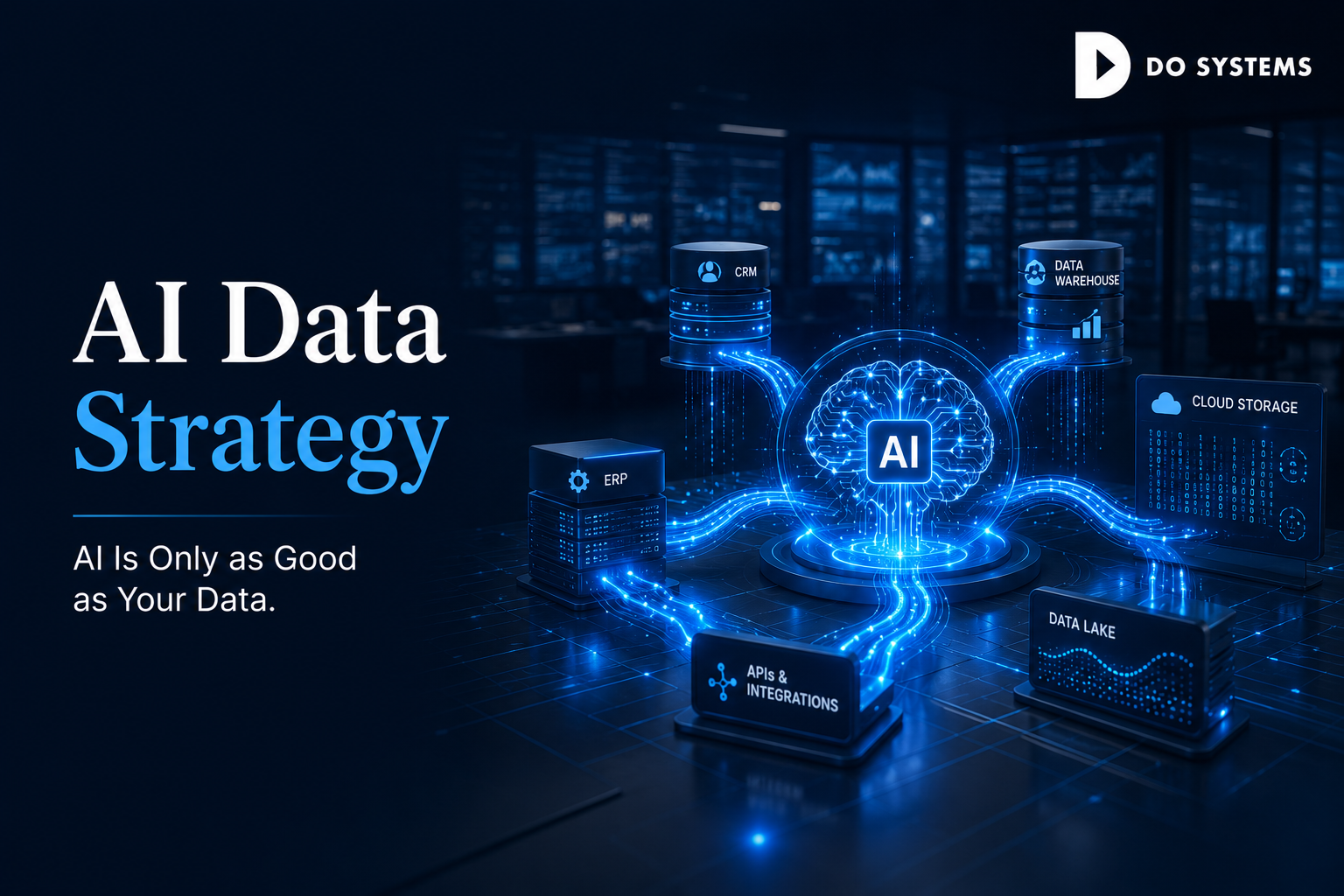
AI agents connect to external systems through APIs, tool integrations, and data connectors. Most modern agent platforms provide pre-built connectors for common business systems – CRM, ERP, helpdesk, calendar, email. Custom integrations are available for systems without pre-built connectors. The integration architecture should be assessed before vendor selection, as connector availability significantly affects implementation timeline and cost.
What does it cost to deploy AI agents for an SMB?
Costs vary significantly by platform, use case complexity, and integration requirements. Cloud-based agent platforms with pre-built connectors are the most accessible entry point for SMBs – many offer consumption-based pricing that makes initial deployment costs manageable. Implementation costs depend primarily on integration complexity. A realistic first deployment budget for an SMB should include platform costs, integration development, testing, and the ongoing cost of monitoring and maintaining agent performance.
Comments are closed