He had already spent the money. Eighteen months earlier, a software vendor had walked into his boardroom with a polished demo, a compelling ROI slide, and a confident close. He signed that afternoon.
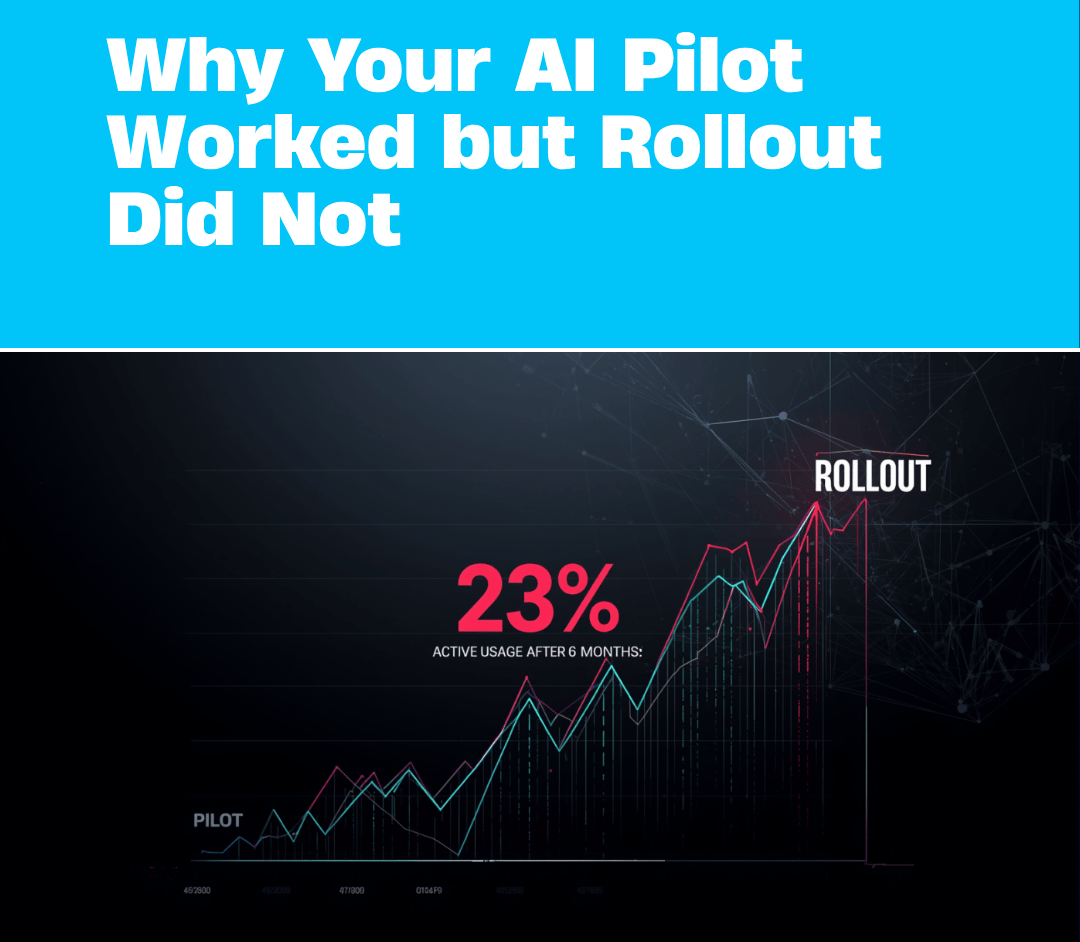
By the time he came to me, the platform had been live for a year. His team used maybe 30 percent of its features. The workflows it was built around did not match how his business actually operated. The vendor’s support team was responsive but the answers were always the same: that functionality is on the roadmap.
He had not bought the wrong technology. He had made the wrong decision about whether to buy at all.
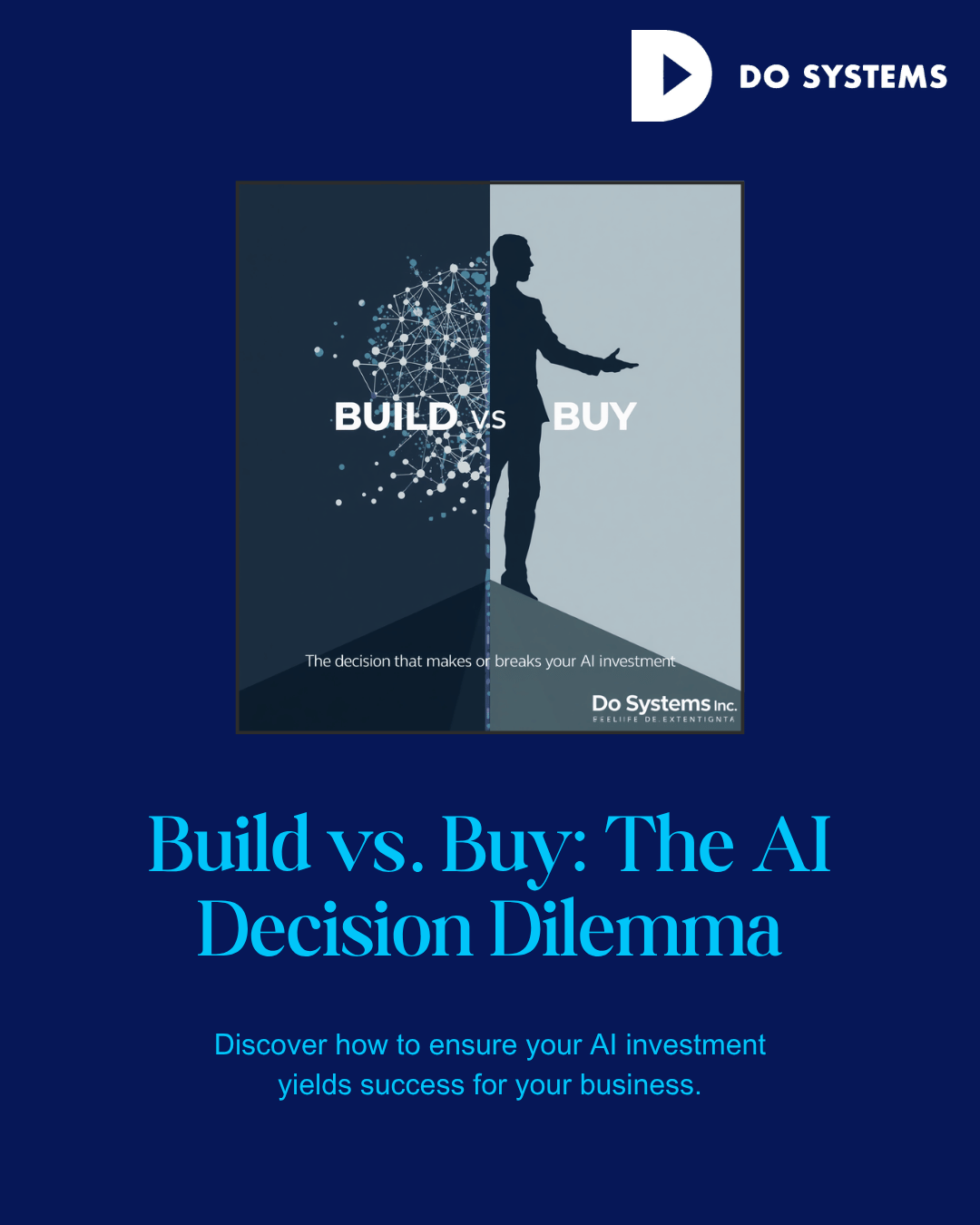
The build versus buy question is one of the most consequential decisions in any AI initiative. It is also one of the most consistently mishandled. Most businesses default to buy because it feels faster and lower risk. In some cases that is correct. In others, it is exactly backwards.
When Buying Makes Sense
There are genuine scenarios where an off-the-shelf AI solution is the right answer, and being clear about them matters.
If the task you are automating is genuinely generic – the same across your industry, with no meaningful variation in how your business handles it – a market solution is likely to serve you well. Email filtering. Calendar scheduling. Basic document extraction from standard formats. These are commodity problems with commodity solutions, and building custom software for them is almost always a waste of investment.
If speed of deployment is genuinely critical and you can accept the limitations of a pre-built tool, buying can get you operational faster than building. The tradeoff is real but sometimes worth making.
If your data volume is too low to train a reliable custom model, a general-purpose solution gives you AI capability without requiring the data foundation that custom development depends on.
When Building Is the Right Answer
The calculation changes significantly when any of three conditions apply.
The first is competitive differentiation. If the AI capability you are building is part of how your business creates value – not just operational efficiency – then handing that capability to a third-party platform means your competitive advantage runs on someone else’s infrastructure, and is available to your competitors on the same pricing plan.
The second is workflow specificity. Most industries have processes that look similar on the surface but differ in the details in ways that matter enormously for AI accuracy. A contract review AI built for commercial real estate leases behaves very differently from one built for technology licensing agreements, even though both are nominally contract review tools. The closer your use case is to a specific, defined workflow, the more a custom solution outperforms a general one.
The third is data ownership. When you use a third-party AI platform, your data – your customer interactions, your operational patterns, your documents – is feeding a system you do not control. For businesses in regulated industries or those with genuinely proprietary data, this is not an abstract risk.
The Hidden Costs Nobody Puts in the Comparison
The buy decision almost always looks cheaper in the spreadsheet. License fee against development cost, and the licence wins on year one. But the spreadsheet rarely includes the full picture.
Integration work. Almost every off-the-shelf platform requires significant integration effort to connect to your existing systems. That work is typically scoped and billed separately, and it almost always takes longer and costs more than the vendor’s estimate.
Customisation ceiling. Every platform has a point at which it cannot be configured further. When your requirements hit that ceiling – and they usually do – you are either stuck with the limitation or paying for a workaround. Neither is free.
Vendor dependency. When a platform changes its pricing, deprecates a feature, or gets acquired, your operations are directly affected and your options are limited.
The business owner I started with eventually decommissioned the platform. The total cost of ownership across the two years, including integration, training, and the internal time spent managing limitations, substantially exceeded what a custom build would have cost – and the custom build would have done what his business actually needed.
How to Make the Decision Correctly
The right framework starts not with the technology options but with the business problem. What specifically are you trying to solve? How much does it cost you today in time, headcount, or error rate? What does good look like, and how precisely can you define it?
From there, the question is whether any existing solution solves that specific problem at the accuracy and integration level your business requires. Not whether a solution exists – there is always a solution that does something close. The question is whether close is close enough.
If the answer is yes, buy. If the answer is no, build. The mistake most businesses make is answering that question based on the vendor demo rather than a rigorous assessment of fit.
Where We Come In
At DoSystems, the first thing we do with any AI engagement is help the business answer this question honestly – before any development or procurement begins. We have built custom AI solutions and we have recommended off-the-shelf ones. The goal is the right outcome for the business, not the more expensive engagement.
If you are at this decision point and not sure which way to go, that conversation is worth having before you commit.
#AIStrategy #AIConsulting #DoSystems #BuildVsBuy #CustomAI #AIDecision #DigitalTransformation #SMBTech
Comments are closed