Three Years In, the Question Still Matters
Three years after generative AI entered the mainstream conversation, most small business owners still struggle to answer one question: what is this, exactly, and what does it actually do for a company like mine? That confusion is understandable. Most of the coverage focuses on large enterprise deployments or speculative futures that feel distant from the day-to-day reality of running a 20- or 50-person business. This guide cuts through the noise.
What Generative AI Is – In Plain Terms
Traditional software is deterministic: you give it an input, it follows programmed rules, it returns the same output every time. Generative AI works differently. It has been trained on vast amounts of text, code, and data, and it uses that training to produce new content that fits the context of your request. Ask it to summarise a contract, and it reads the contract and produces a summary. Ask it to draft a follow-up email, and it writes one based on the context you provide.
The ‘generative’ part simply means it generates – it creates something new rather than retrieving something that already exists. That distinction matters because it is what makes generative AI useful for open-ended tasks: drafting, summarising, responding, analysing, and explaining.
What It Is Not
Generative AI is not a magic solution that runs your business while you sleep. It makes mistakes. It requires human oversight. And deploying it effectively – in a way that integrates with your actual workflows – requires planning. A ChatGPT subscription is generative AI. A custom AI system built to process your specific invoices, read your customer emails, or summarise your sales calls is also generative AI. They are not the same in terms of business impact.
How Small Businesses Are Actually Using It
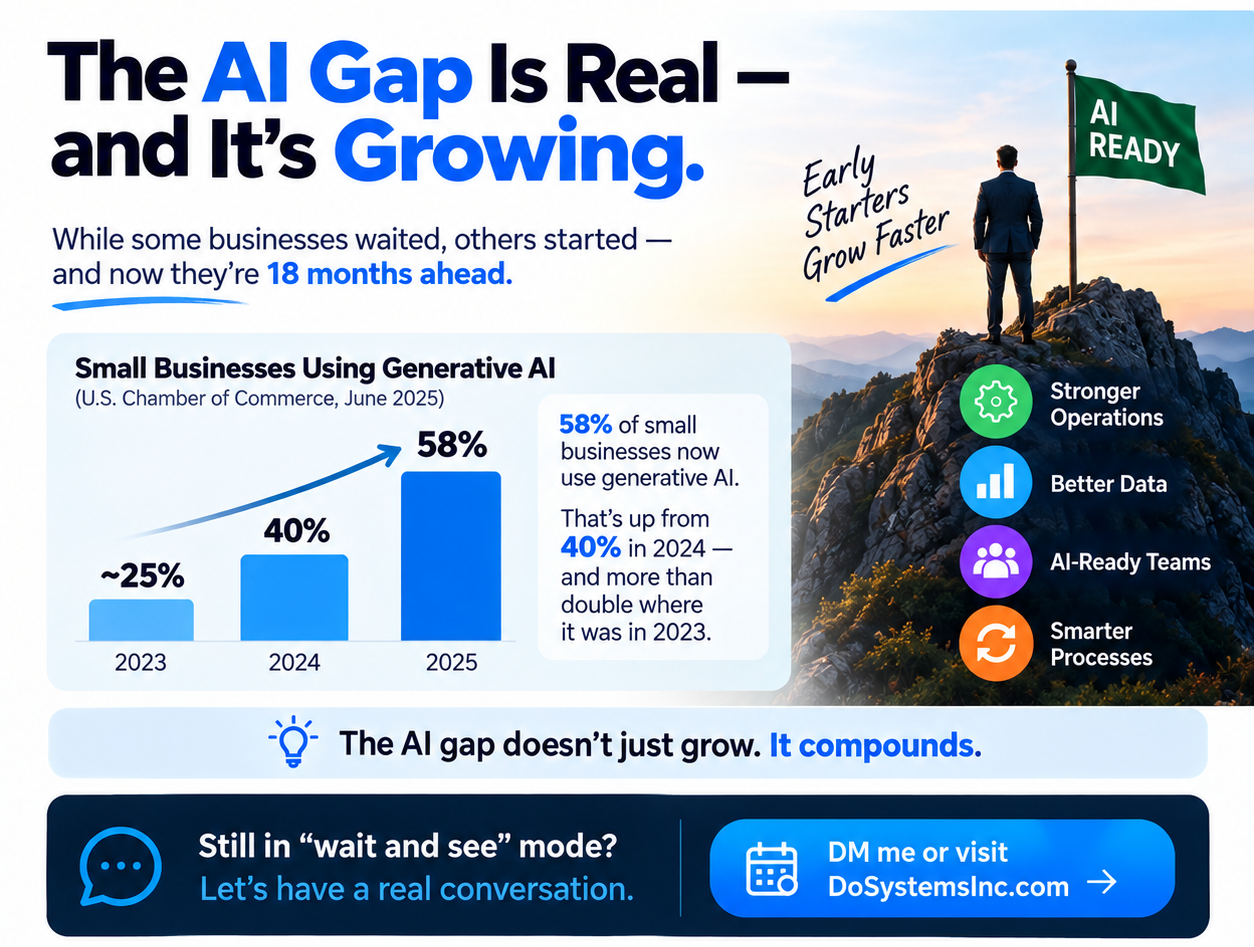
According to the US Chamber of Commerce’s 2025 Empowering Small Business report – which surveyed 3,870 US small businesses with fewer than 250 employees in June 2025 – 58% of small businesses now say they use generative AI, up from 40% in 2024 and more than double the adoption rate in 2023. The most common applications fall into five categories:
Content creation and marketing: Writing first drafts of blog posts, social media updates, email newsletters, and product descriptions. This is the most accessible entry point and where most small businesses start.
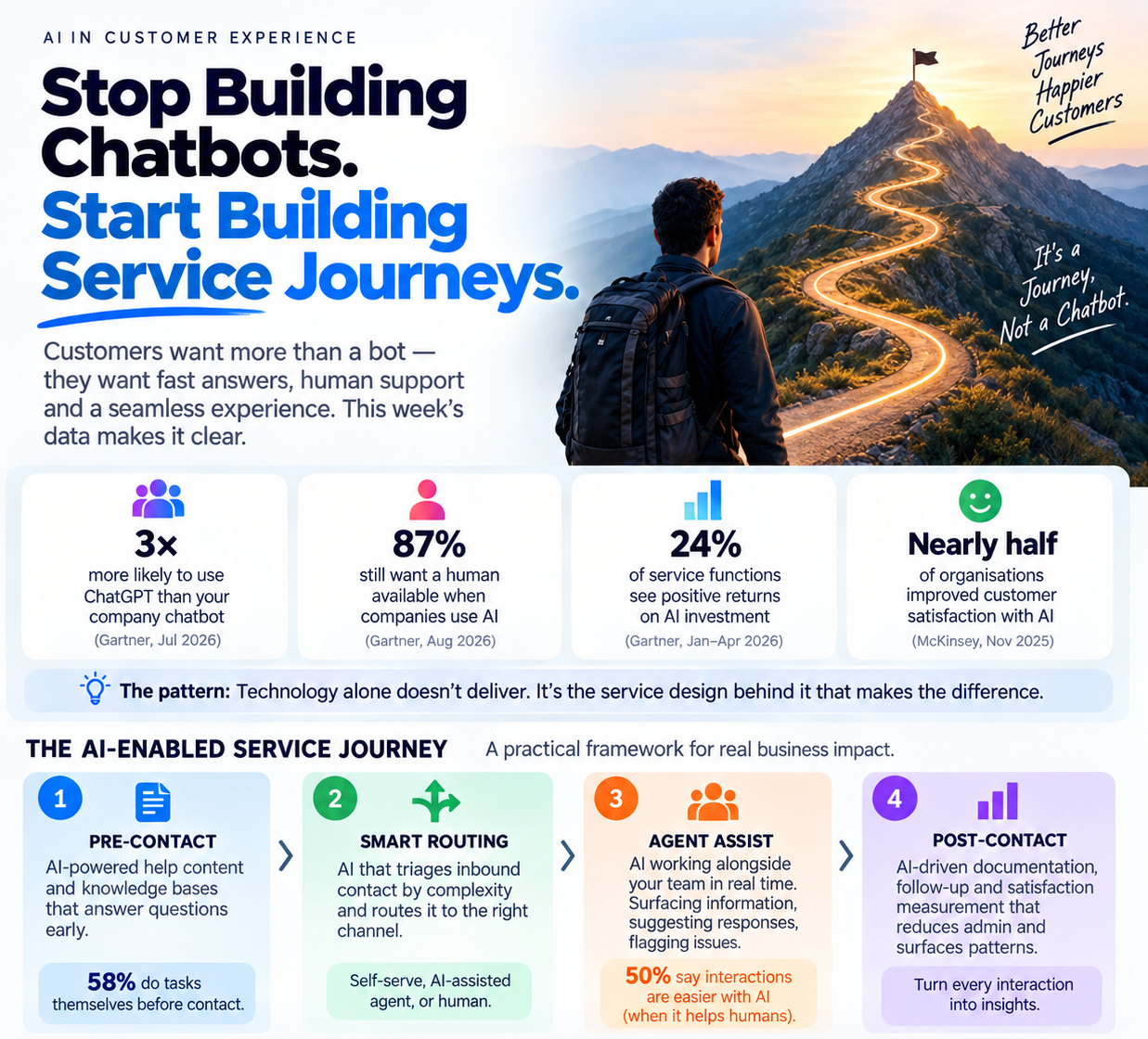
Customer service: AI-powered chatbots that handle frequently asked questions, appointment booking, and standard support requests without requiring staff time.
Document processing: Summarising contracts, extracting key terms from legal documents, condensing lengthy reports into actionable highlights.
Internal reporting: Generating weekly summaries from data pulled from CRM, accounting, or project management systems – without a team member manually compiling spreadsheets.
Hiring and HR: Drafting job descriptions, screening resumes against criteria, and generating structured interview questions based on role requirements.
Where Most Small Businesses Still Fall Short
McKinsey’s November 2025 State of AI survey – conducted across 1,993 participants in 105 countries between June and July 2025 – found that while 88% of organisations report regularly using AI in at least one business function, only 29% of companies with under $100 million in revenues have reached the scaling phase. The majority are still experimenting or using AI for isolated tasks rather than embedding it into core workflows.
That gap represents the difference between using AI to write a social media post and using AI to fundamentally reduce the time your team spends on a high-volume process. Both are generative AI. Only one delivers the kind of ROI that moves a business forward.
What This Means for Your Business
The question is no longer whether generative AI is relevant to small businesses. More than half of them are already using it. The question is whether you are using it in a way that compounds – a way that keeps getting more valuable as the system learns your business and your team learns to work alongside it.
The businesses pulling ahead are not doing anything exotic. They are identifying one high-volume process, building an AI-assisted workflow around it, measuring the time and cost savings, and moving to the next. That is the entire playbook.
DoSystems has delivered more than 120 AI and technology projects for businesses across healthcare, legal, real estate, insurance, and transportation. If you are trying to figure out where to start, book a free AI strategy call at DoSystemsInc.com.

Comments are closed