
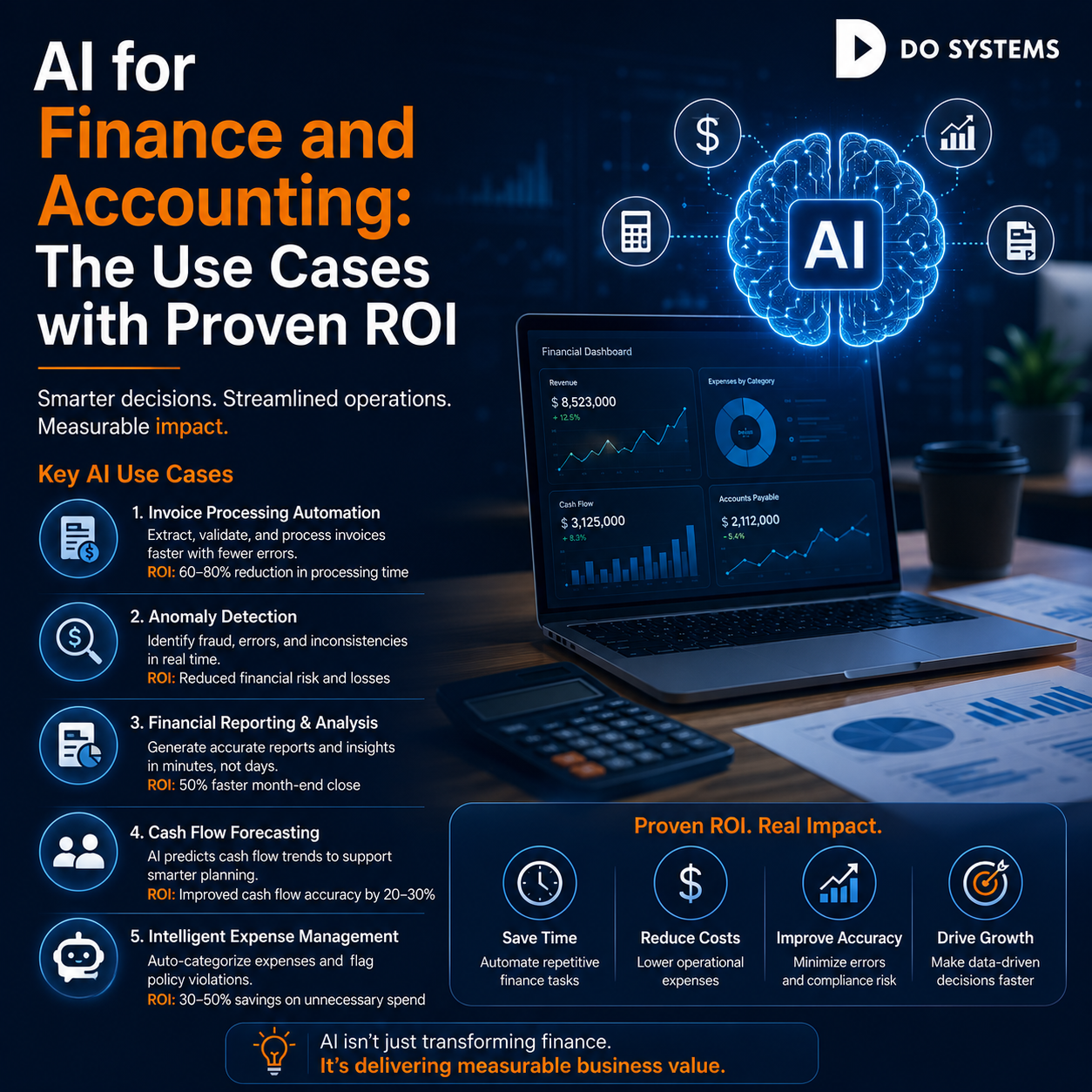
McKinsey’s most recent survey of CFOs found that 44% are now using generative AI for five or more use cases in their finance function – up from 7% in the prior survey period. The pace of adoption in finance has been faster than almost any other business function, and the reason is straightforward: the business case for finance AI is measurable in financial terms in a way that is cleaner than most other functional applications.
Finance processes are characterised by high transaction volume, rule-based logic, and clear error costs. These are exactly the conditions where AI performs reliably. The accounts payable function that processes 500 invoices per week has a quantifiable cost per invoice, a quantifiable error rate, and a quantifiable cost per error. AI deployment produces a measurable change in each of these. The business case writes itself if the implementation is sound.
McKinsey also reports that AI high performers in finance achieve returns exceeding $10.30 per dollar invested – nearly three times the average across all AI investments. Finance is where that performance differential is most consistently produced.
The Finance Use Cases with Proven ROI
Accounts Payable and Invoice Processing
AP automation is the highest-volume, most consistent AI return in finance. The manual process – receiving an invoice, matching it to a purchase order, validating amounts and tax treatment, routing for approval, posting to the ledger – is repetitive, time-consuming, and error-prone at scale. AI handles the pattern-matching and routing elements of this workflow with high accuracy on structured invoice formats.
The productivity impact is significant. Businesses typically see processing time per invoice reduce by 60–80% on structured invoice types. Error rates on routine matching fall substantially. The AP team’s capacity shifts from data entry and matching to exception handling and vendor relationship management – work that requires judgement and adds more value.
The implementation requirement: supplier invoice data needs to be in a consistent format for highest accuracy. A period of supervised operation – where the AI’s matches are reviewed before posting – is standard practice before full automation. Expect 4–8 weeks of supervised operation before the accuracy thresholds required for automatic posting are met.
Month-End Close and Reconciliation
The month-end close process is one of the most consistently painful finance processes in mid-sized businesses: high pressure, high volume, and high repetition. AI can accelerate it by automating routine reconciliation tasks, flagging anomalies that require human review, and reducing the number of manual journal entries required.
The practical result is a reduction in close cycle time – typically from 10–15 days to 5–8 days in well-implemented deployments – and a shift in finance team time from mechanical reconciliation to analysis and reporting. The close still requires human judgement for complex items, but the proportion of the close that requires human involvement decreases substantially.
FP&A and Cash Flow Forecasting
Financial planning and analysis – budgeting, forecasting, scenario modelling – has historically been bottlenecked by the time required to compile data from multiple systems into a coherent model. AI addresses this bottleneck at the data preparation stage, automating the aggregation and normalisation of actuals, and providing probabilistic forecasting based on historical patterns and external indicators.
The result is not necessarily a more accurate forecast – forecast accuracy depends on business visibility that AI cannot create from nothing. The result is faster forecasting cycles, more scenario options available to decision-makers, and finance team time redirected from building models to interpreting them. For businesses where the CFO is currently spending significant time on data assembly, this is a material productivity gain.
Anomaly Detection and Fraud Prevention
AI-based anomaly detection monitors transaction patterns in real time and flags deviations from expected behaviour – duplicate payments, unusual vendor banking details, transactions outside approved parameters, outliers in expense submissions. The business case is direct: the cost of deployment is measured against the cost of the fraud or error the system prevents.
The detection accuracy of well-configured anomaly detection systems is substantially higher than periodic manual review – AI catches patterns that span multiple transactions and time periods that are invisible to a human reviewer looking at individual items. For businesses that have experienced supplier fraud or duplicate payment issues, anomaly detection is typically the fastest-payback finance AI deployment.
What CFOs Need in Place Before Deploying
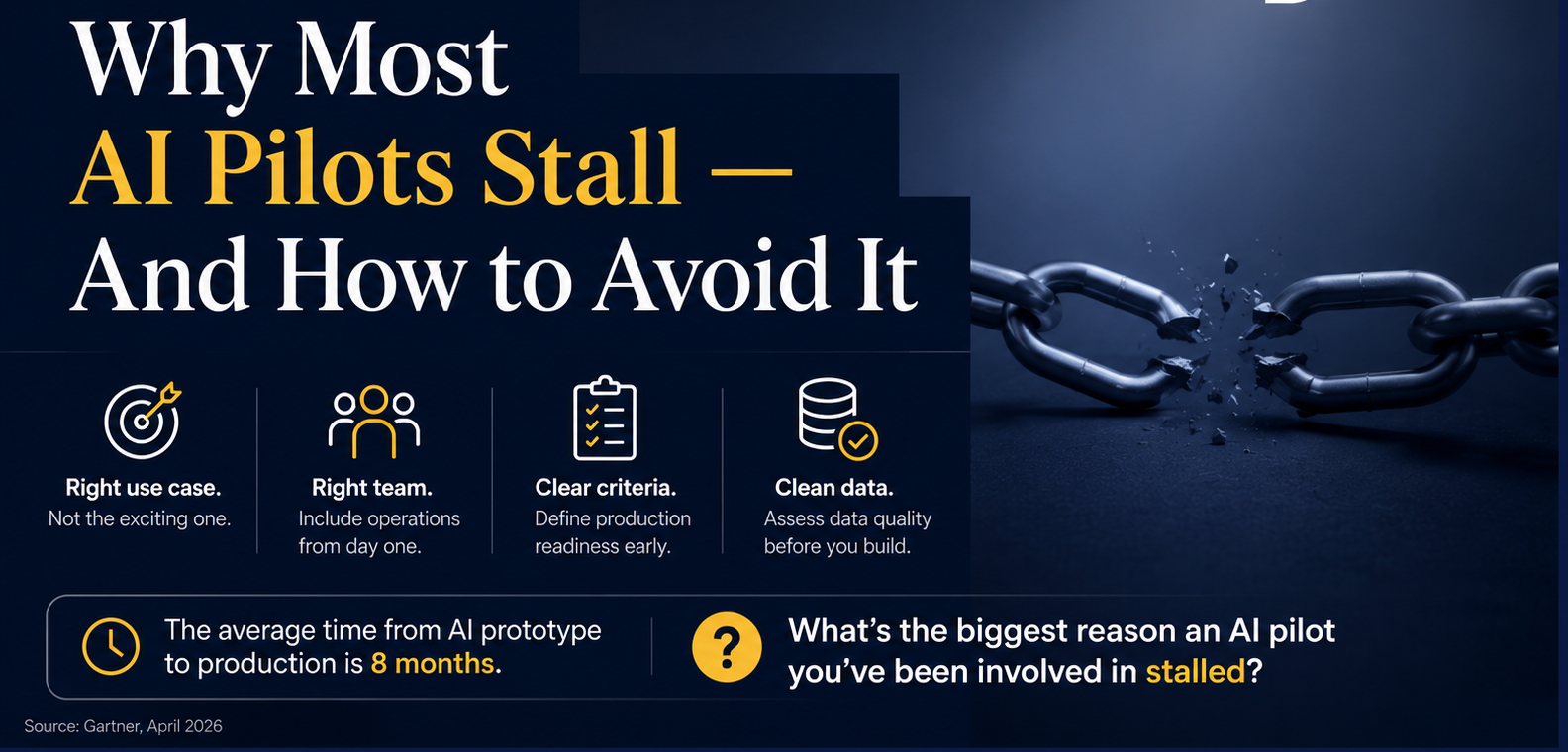
McKinsey’s CFO survey found that 65% plan to increase generative AI investment – but nearly two thirds of respondents also said their organisations have not yet begun scaling AI across the enterprise. The gap between intent and execution in finance AI is almost always in the data and systems layer.
Two prerequisites determine whether finance AI delivers its projected returns. First: ERP and accounting system data quality. AI models for invoice processing, reconciliation, and forecasting are only as accurate as the underlying data. A data quality assessment before deployment is not optional – it determines whether the ROI projections are realistic. Second: a change management plan for the finance team. Finance professionals are skilled at their current processes. Introducing AI that changes those processes requires clear communication, training, and a period of parallel operation before full transition.
Frequently Asked Questions
How much can AI reduce finance team costs?
Returns vary significantly by use case and deployment quality. AP automation typically reduces processing cost per invoice by 60–80% on structured invoice types. McKinsey identifies AI high performers achieving $10.30 return per dollar invested – significantly above average. Realistic targets for initial deployments are typically 20–40% cost reduction in the targeted process within 12 months.
Is AI for finance suitable for small and mid-sized businesses?
Yes, and the economics are often better for SMBs than for enterprises. Enterprise finance teams have more complex ERP environments and data structures. SMBs with modern cloud accounting platforms (Xero, QuickBooks, Sage) and relatively clean transaction data can deploy finance AI with shorter implementation timelines and lower integration costs.
What finance AI tools should a business evaluate?
The appropriate tools depend on the specific use case. For AP automation: Hypatos, Rossum, ABBYY Vantage, or the AI features inside your existing ERP. For FP&A: Pigment, Anaplan, or Cube. For anomaly detection: Workiva, AppZen, or built-in features in modern accounting platforms. Always evaluate against your specific ERP environment first.

Comments are closed