Enterprise AI Agent Development Services — Automate Workflows, Scale Operations

  • Home
  • Enterprise AI Agent Development Services — Automate Workflows, Scale Operations

Build secure AI agents that execute real work across your systems

Do Systems designs and deploys custom enterprise AI agents that reason, plan, and take autonomous action across your systems — automating multi-step operational workflows that would otherwise require human coordination across CRM, ERP, ITSM, data platforms, and collaboration tools.

Unlike chatbots that answer questions or RPA bots that run fixed scripts, our AI agents understand context, adapt to changing conditions, and complete end-to-end goals — with built-in guardrails, human escalation paths, and full audit logging.
What Is an AI Agent? (And How It Differs from Chatbots and RPA)

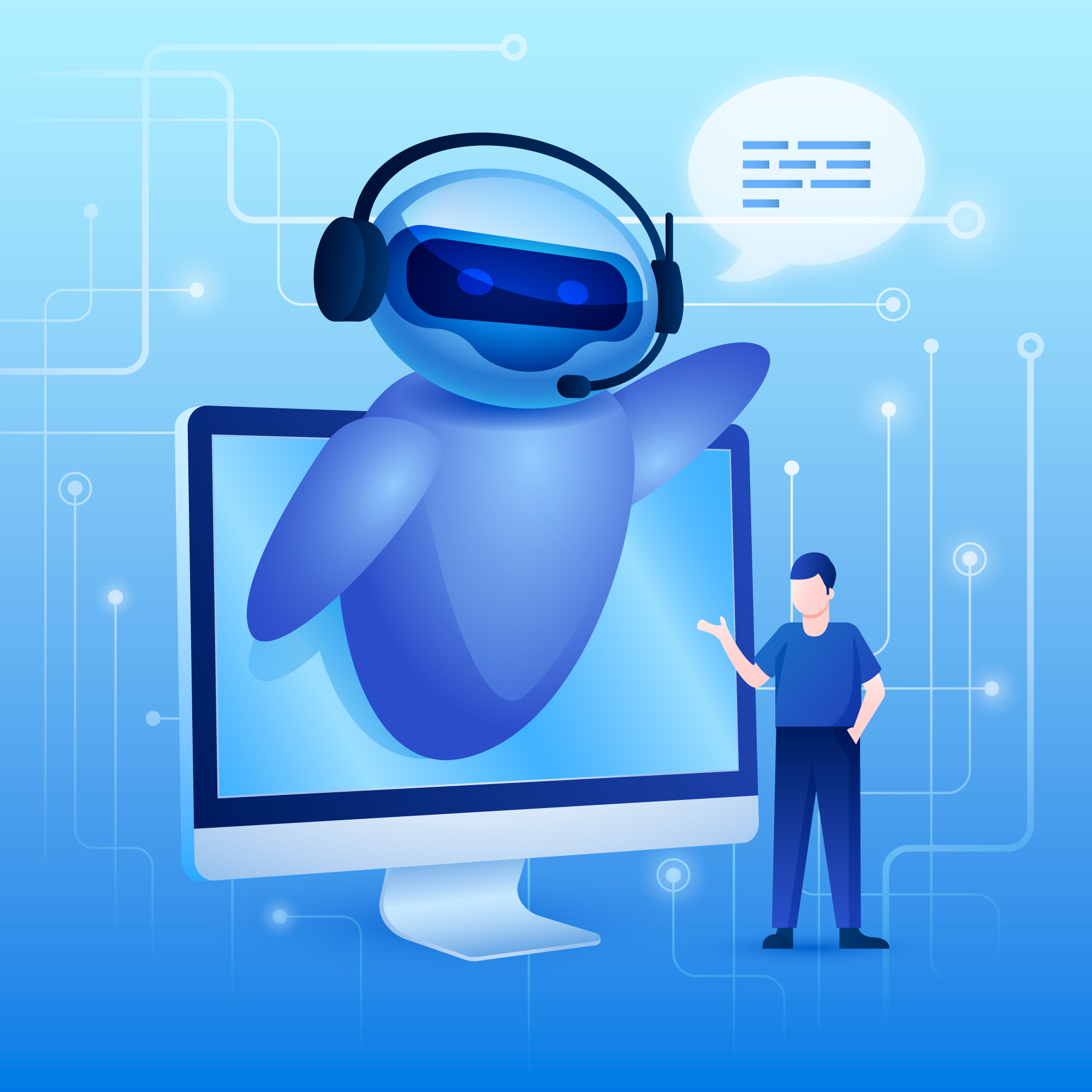
An AI agent is an intelligent software system that can autonomously perceive its environment, reason about goals, select and use tools, and take sequences of actions to complete complex, multi-step objectives — without requiring a human to manage each step.

Unlike traditional software that follows fixed logic, AI agents use large language models (LLMs) for reasoning, connect to real-world systems via APIs and integrations, maintain memory across interactions, and know when to act independently versus when to escalate to a human for review.

The result: workflows that previously required human coordination across multiple systems and teams can now be handled autonomously — faster, more consistently, and at scale — while keeping humans in control for decisions that require judgment, compliance, or accountability.

Chatbots

  • Scope: Single-turn Q&A
  • Reasoning: Script / FAQ lookup
  • Actions: Responds only
  • Systems: One interface
  • Goal: Answer a question

RPA Bots

  • Scope: Deterministic tasks
  • Reasoning: Rule-based only
  • Actions: Click / form fill
  • Systems: Fixed integrations
  • Goal: Repeat a defined sequence

AI Agents (Do Systems)

  • Scope: Multi-step objectives
  • Reasoning:LLM + dynamic planning
  • Actions: Read, write, trigger, escalate
  • Systems: CRM, ERP, ITSM, APIs, DBs
  • Goal: Complete a business outcome

What We Build: Custom AI Agents for Enterprise Operations

We develop production-ready AI agents that operate like reliable digital employees — they understand context, work within approved permissions, use the right tools for each task, and collaborate with humans when required.

Our engagements range from single-purpose agents (a customer service agent that handles Tier-1 inquiries end-to-end) to complex multi-agent systems where specialized agents collaborate, hand off tasks, and coordinate across departments — all orchestrated with LangChain, AutoGen, or CrewAI depending on the use case.
Every agent we build is deployed with enterprise-grade safety controls: role-based access permissions, human-in-the-loop escalation paths, full action audit logging, and performance monitoring dashboards. We don't just build agents — we build agents your compliance, legal, and IT security teams can stand behind.

Core AI Agent Capabilities We Deliver

sr icon 1 1

Autonomous Decision-Making

Our AI agents use LLM-powered reasoning combined with structured planning patterns (ReAct, Chain-of-Thought, and tool-calling loops) to break complex objectives into steps, execute each step using the right tool or system, evaluate the result, and adapt their approach if something changes. Every agent operates within a defined permission boundary — it can only access and act on systems and data it has been explicitly authorized to use. For high-stakes decisions, configurable guardrails trigger automatic escalation rather than autonomous action.

sr icon 1 4

Integration-Ready (Systems + Data)

An AI agent is only as useful as the systems it can interact with. We build agents with deep integration capabilities — connecting via REST APIs, GraphQL, webhooks, and native SDKs to your CRM (Salesforce, HubSpot), ERP (SAP, Oracle, Odoo), ITSM (ServiceNow, Jira), data platforms (Snowflake, Databricks), and collaboration tools (Slack, Teams, email). Agents can read data, write records, trigger workflows, send notifications, and create tasks — across any combination of systems your business runs on.

sr icon 1 2

Memory & Context Awareness

Effective AI agents don't start from zero on every interaction. We design agents with multi-layer memory architecture: short-term working memory (within a session), long-term episodic memory (across sessions via vector databases), and semantic memory (enterprise knowledge from documents, SOPs, and policies via RAG). This allows agents to remember past interactions, learn from previous outcomes, and apply relevant organizational knowledge — producing more accurate, contextually appropriate responses and actions over time.

fe 2 4 1

Multi-Agent Collaboration

For complex enterprise workflows that span multiple domains — say, a sales qualification process that touches CRM, calendar, email, and a pricing system — a single monolithic agent is the wrong architecture. We design multi-agent systems where specialized agents handle specific domains and a coordinator agent orchestrates the overall workflow, delegates tasks, and synthesizes results. This modular approach produces more reliable outcomes, easier debugging, and cleaner separation of responsibilities at scale.

sr icon 3 4 1

Goal-Oriented Workflows

Unlike chatbots that respond to single prompts, our AI agents are designed around business objectives with defined success criteria. Each agent is configured with a goal (e.g., "resolve this customer support ticket end-to-end"), a set of tools it can use, a decision tree for escalation, and KPIs to measure success. This goal-driven architecture means agents stay focused, can handle exceptions gracefully, and their performance can be measured, audited, and continuously improved.

sr icon 1 5

Human-in-the-Loop Approvals

True enterprise AI autonomy is not about removing humans — it's about deploying human attention where it matters most. We build configurable human-in-the-loop checkpoints into every agent: confidence thresholds that trigger escalation, explicit approval gates for financial or compliance-sensitive actions, override mechanisms for supervisors, and complete audit trails of every action taken and every decision made. Your teams stay in control — the agent just handles everything it's qualified to handle on its own.

Our AI Agent Development Process: From Pilot to Production

Our AI agent development engagements follow a structured, outcome-focused process — typically moving from concept to pilot in 6 to 10 weeks, with full production deployment in 3 to 4 months depending on integration complexity.

  1. Discovery & Use Case Selection
    We run a structured discovery session with your business and IT stakeholders to define the target workflow, agent goals, KPIs, system boundaries, and success criteria. We also identify the data sources, APIs, and permissions the agent will need — and flag any security or compliance considerations early.
  2. Agent Architecture Design
    We design the agent role(s), tool set, memory strategy, permission model, escalation logic, and orchestration approach (single agent vs multi-agent). We select the right LLM and framework (LangChain, AutoGen, or CrewAI) based on your latency, cost, and capability requirements.
  3. Integration & Knowledge Grounding
    We build the system integrations (APIs, connectors, webhooks) and configure the agent's knowledge layer — connecting to your documents, SOPs, knowledge bases, and databases using RAG (Retrieval-Augmented Generation) to ensure accurate, grounded responses.
  4. Evaluation, Safety & Monitoring
    Before deployment, we run comprehensive evaluation: accuracy testing, failure mode analysis, security review, adversarial prompt testing, and performance benchmarking. We also instrument logging, alerting, and a monitoring dashboard so you have full visibility into agent behavior post-launch.
  5. Pilot Rollout & Refinement
    We deploy the agent to a controlled pilot group, measure results against defined KPIs, collect structured feedback, and iterate rapidly. Most agents improve significantly in the first 2–3 weeks of pilot use.
  6. Production Scale & Handoff
    After a successful pilot, we scale the deployment, document the system architecture, and train your internal teams on monitoring, managing, and extending the agent. We also offer an ongoing managed support option.

Business Benefits of Custom AI Agents

  • Eliminate repetitive manual workload at scale — AI agents take over the time-consuming, repetitive coordination work that consumes your team's capacity — ticket routing, data entry, report generation, follow-up emails, approval requests — freeing your people to focus on work that requires genuine human judgment and creativity.
  • Compress decision cycles and operational latency — Workflows that take hours or days when routed through human queues can be completed in seconds by an AI agent with the right system access. Faster decisions mean faster customer responses, faster revenue recognition, and faster operational adaptation.
  • Deliver consistent, 24/7 customer and employee experiences — AI agents don't take sick days, don't have bad days, and don't forget to follow the process. Whether serving customers at 2am or handling internal IT requests on weekends, agents deliver the same quality, every time — at any volume.
  • Scale operations without scaling headcount — The same AI agent architecture that handles 100 transactions a day can handle 10,000 with no additional staffing cost. This makes AI agents especially powerful for growth-stage companies and enterprises entering new markets.
  • Continuously improve through structured feedback — Unlike software that stays static, AI agents can improve over time through structured feedback loops, fine-tuning, and updated knowledge bases — making each deployment more accurate, more efficient, and more aligned with your evolving business needs.

AI Agent Use Cases We've Built and Deployed

We've designed and deployed AI agents across a wide range of enterprise workflows. Here are the most common use cases we build — and the specific problems each one solves:

Industries We Build AI Agents For

    • Healthcare : Patient intake agents, clinical document routing, prior authorization automation, and care coordination agents — built with HIPAA-compliant data handling and strict access controls.
    • Legal : Contract review routing, clause extraction, legal research assistance, and matter management coordination agents — with attorney-client privilege protections and full action logging.
    • Financial Services : Reconciliation agents, fraud alert triage, loan processing coordination, and compliance monitoring agents for banks, insurers, and fintechs — with SOX and FINRA-aligned audit trails.
    • Transportation & Logistics : Dispatch coordination agents, shipment exception agents, carrier communication agents, and real-time tracking intelligence systems for freight, 3PL, and fleet operators.
    • Real Estate : Lead qualification agents, listing Q&A agents, document processing agents, and client communication agents for real estate platforms and property management companies.
    • Pharmaceutical : Clinical trial coordination agents, regulatory submission tracking, and adverse event monitoring agents aligned with FDA 21 CFR Part 11 requirements.

Stats Bar

0 +
Projects delivered
0 +
Enterprise clients
0
Years engineering
0
Industries served

AI Agent Technology Stack

We don't lock clients into a single AI platform or framework. We select the right technology for each agent based on your use case, latency requirements, cost model, data residency needs, and existing infrastructure. Here's the core stack we work with:

sr icon 1 1

Large Language Models (LLMs) — GPT-4o, Claude 3, Gemini 1.5, Ollama (local)

We select and configure the right LLM for each agent based on reasoning capability, cost, latency, context window size, and whether the model can be deployed privately. For sensitive enterprise data, we support on-premises or private cloud LLM deployments using Ollama or Azure OpenAI Service.

sr icon 1 4

Integration APIs — REST, GraphQL, webhooks, native SDKs

Salesforce, HubSpot, SAP, Oracle, Odoo, ServiceNow, Jira, Slack, Teams, Snowflake, Databricks, and any custom system with an accessible API. We also build custom connectors for legacy systems without native APIs.

sr icon 1 2

Multi-Agent Frameworks — LangChain, AutoGen, CrewAI

LangChain for flexible chain-of-thought and tool-calling pipelines; AutoGen for complex multi-agent conversation patterns; CrewAI for role-based agent collaboration. We select the framework based on your agent architecture and team's ability to maintain it long-term.

fe 2 4 1

Reinforcement Learning (RL) — when needed

For agents that need to optimize long-horizon decisions (e.g., dynamic pricing, route planning, resource allocation), we incorporate RL-based approaches where LLM reasoning alone is insufficient.

sr icon 3 4 1

Vector Databases — Pinecone, Weaviate, pgvector, Qdrant

Used for long-term agent memory, semantic search, and RAG-based knowledge grounding. We design the vector store architecture around your data volume, update frequency, and retrieval latency requirements.

sr icon 1 5

Cloud Infrastructure — AWS Bedrock, Azure OpenAI, Google Vertex AI, private cloud

We deploy agents on the cloud infrastructure that matches your security, compliance, and data residency requirements.

Why Choose Do Systems Inc for AI Agent Development

There are many teams that can build an AI chatbot. Building enterprise AI agents that work reliably in production — integrated into your real systems, compliant with your security policies, and trusted by your compliance team — is a different challenge.

    • We build for production, not demos — Every agent we ship goes through structured evaluation, adversarial testing, failure mode analysis, and performance benchmarking before it touches a real workflow. We don’t deliver proofs-of-concept that fall apart under real load.
    • We design for enterprise constraints — Your agents will operate within RBAC permissions, maintain audit logs, respect data residency requirements, and follow your approval policies — not just your functional requirements.
    • We are framework-agnostic — We don’t force every problem into the same LangChain template. We select LangChain, AutoGen, or CrewAI — and the right LLM — based on what the use case actually requires.
    • We stay with you through scale — Our engagement doesn’t end at launch. We offer structured post-deployment support, monitoring, and iteration — so your agents keep improving as your business evolves.
    • 12 years of enterprise software experience behind every agent — Our AI capabilities are backed by deep expertise in system integration, data architecture, security, and enterprise software delivery — not just AI experimentation.

Frequently Asked Questions About Ai Agents Development

An AI agent is an intelligent software system that can autonomously reason, plan, and take multi-step actions across real business systems to complete complex objectives. Unlike chatbots (which respond to questions from scripts) or RPA bots (which execute fixed, deterministic sequences), AI agents combine LLM reasoning, dynamic planning, tool usage, and workflow orchestration — and can adapt their approach when conditions change. They also know when to escalate to a human rather than acting autonomously on high-stakes decisions.

Yes — when built correctly. Every AI agent we deploy includes role-based access controls (RBAC), encrypted data handling, full action audit logging, and configurable human escalation paths. For regulated industries, we support HIPAA-aligned, SOX-compliant, and FINRA-aligned architectures. Agents can be deployed in private cloud or on-premises environments for organizations with strict data residency or sovereignty requirements.

AI agents connect to your systems via REST APIs, GraphQL, webhooks, and native SDKs. We have integration experience with Salesforce, HubSpot, SAP, Oracle, Odoo, ServiceNow, Jira, Slack, Microsoft Teams, Snowflake, Databricks, and most custom enterprise systems. For legacy systems without native APIs, we build custom connectors. The agent only accesses systems and data it has been explicitly authorized to use.

Typically no. AI agents are most effective when they take over repetitive, high-volume coordination work — freeing your employees to focus on strategic decisions, creative problem-solving, and relationship-intensive work that genuinely requires human judgment. Most of our clients see AI agents as a way to scale their teams' capacity without growing headcount proportionally.

Most AI agent engagements move from discovery to a working pilot in 6 to 10 weeks, depending on integration complexity and the number of systems involved. Full production deployment typically takes 3 to 4 months. Simpler, well-scoped use cases with clean APIs can be piloted in as little as 4 weeks.

AI agents perform best on workflows that are decision-heavy, cross-system, high-volume, and currently require significant human coordination. Common examples: customer support escalation and resolution, employee onboarding, lead qualification and follow-up, invoice reconciliation, compliance document review, logistics exception management, and IT ticket routing and resolution.

We define KPIs at the start of every engagement before a single line of code is written. Common metrics include: time-to-resolution for the automated workflow, percentage of tasks completed autonomously vs escalated, accuracy rate, cost-per-transaction compared to manual process, customer satisfaction scores (for customer-facing agents), and adoption rate across the target user group. We validate these during the pilot phase before scaling.

We work with GPT-4o, Claude 3, Gemini 1.5, and Ollama (for private/on-premises deployments) as the underlying reasoning models. For orchestration, we use LangChain, AutoGen, and CrewAI — selected based on the agent architecture, team maintainability, and use case requirements. We are framework-agnostic and always select the right tool for your specific context rather than defaulting to a single stack.

Ready to Build Your Enterprise AI Agent?

Empower your organization with AI agents that deliver measurable efficiency, smarter decision-making, and superior customer satisfaction.